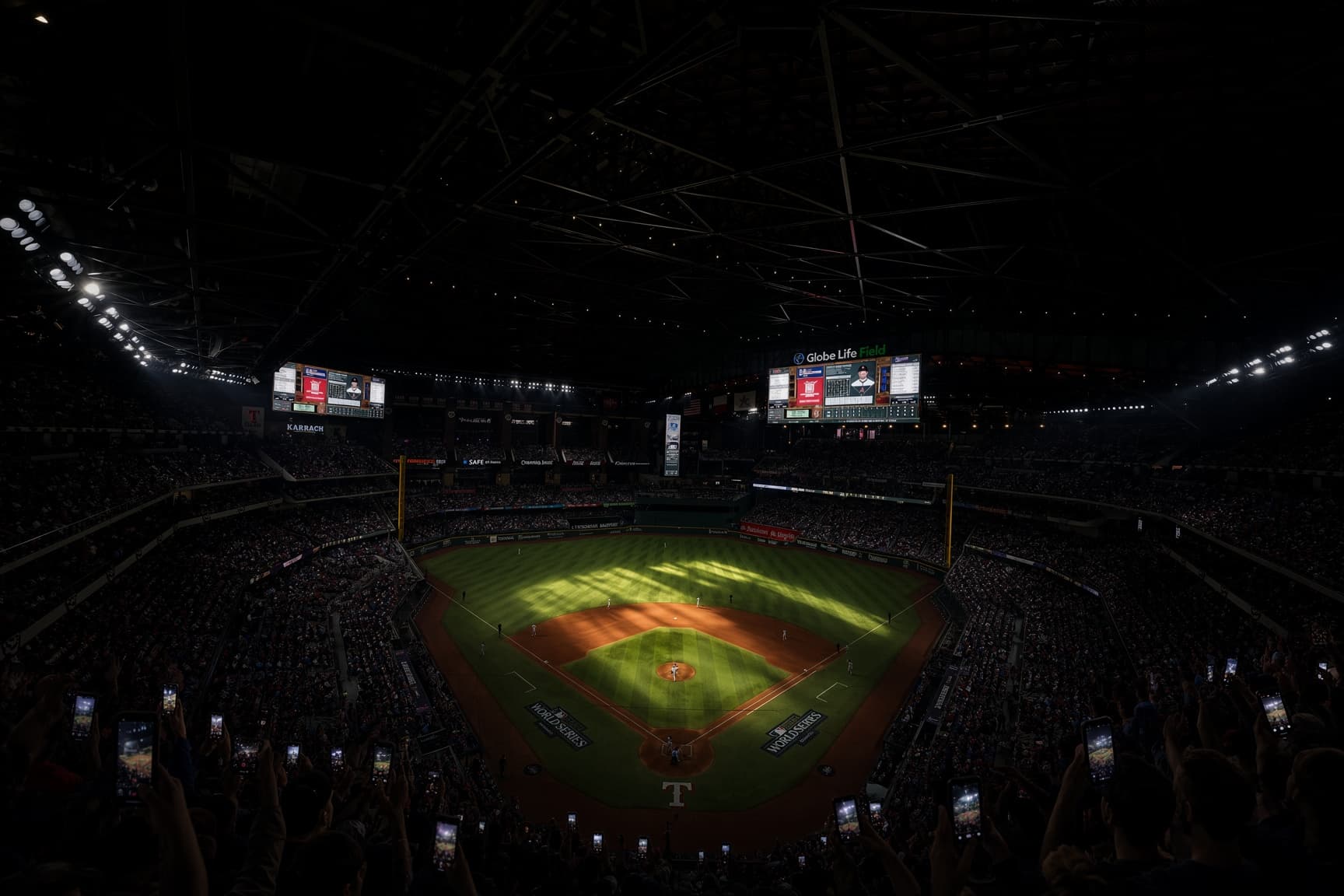
The 2026 World Series uses a best-of-seven format. Four wins secure the championship. The venue sequence is 2-3-2, with the opening host also assigned the final two games if needed. MLB's postseason rules and World Series home-field explanation establish that structure.
That leaves two separate questions when you read a schedule: where would a game take place, and does the series last long enough to require it? A listing for Game 7 answers the first question. It doesn't promise that the game will happen.
Best-of-seven sets a maximum
A team can finish the series with a 4-0, 4-1, 4-2 or 4-3 record. Those outcomes require four, five, six or seven games, respectively. There is no need to play out unused games after a team reaches four victories.
This is a count of game wins, not combined runs. For a hypothetical example, imagine Team A wins the opener 9-1, then Team B wins the next three games 2-1 each. Team A has scored 12 runs to Team B's seven, but Team B leads the series 3-1. The eight-run margin in the opener doesn't count as extra wins.
To check any series score, add the two win totals to find how many games have been completed. A 2-1 lead means three games are complete. A 3-2 lead means five are complete. Then subtract each team's wins from four to see how many more victories it needs.
At 3-2, the leader needs one more win and the trailing team needs two. The trailing team must win both remaining games to become champion. Winning only the next game would tie the series, not finish it.
Which team gets home-field advantage?
Higher regular-season winning percentage determines home field. Equal percentages trigger the head-to-head tiebreaker. MLB's current explanation supplies the rule.
Keep that comparison separate from the series score. Regular-season winning percentage and World Series wins describe different periods. A club's performance in the championship series doesn't rewrite the regular-season figure used to assign the venues.
For an illustrative calculation, suppose two finalists had regular-season records of 96-66 and 92-70. Both played 162 games. Their winning percentages would be 96 divided by 162, about.593, and 92 divided by 162, about.568. These are invented records used to explain the comparison, not the records of the 2026 finalists.
A postseason seed is also a separate label. Don't replace the required regular-season comparison with whichever seed number looks stronger. MLB's postseason format guide explains seeding within each league.
Read the 2-3-2 sequence by game number
In the table, Team A has home-field advantage and Team B is its opponent. These labels describe the venue assignment only. Neither label represents a real club or a prediction.
| Series game | Host | When it is needed |
|---|---|---|
| Game 1 | Team A | Opening game |
| Game 2 | Team A | Both teams still below four wins |
| Game 3 | Team B | Both teams still below four wins |
| Game 4 | Team B | Both teams still below four wins |
| Game 5 | Team B | Neither team has won the first four |
| Game 6 | Team A | Neither team has four wins after Game 5 |
| Game 7 | Team A | The series is tied 3-3 |
The table translates the venue order in MLB's 2026 World Series schedule into neutral team labels. Read it from top to bottom and stop when one team earns its fourth win.
The three numbers describe blocks of games at the same ballpark. Team A's third home game would be Game 6 of the series. Team B's first home game would be Game 3. Keeping the overall game number beside the host avoids confusing those two counting systems.
Home-game counts depend on series length
Count the host column only through the last game actually played:
| Series length | Games hosted by Team A | Games hosted by Team B |
|---|---|---|
| Four games | Two | Two |
| Five games | Two | Three |
| Six games | Three | Three |
| Seven games | Four | Three |
Team A gets a numerical home-game advantage only if the series reaches Game 7. In a five-game series, Team B actually hosts more games. This follows directly from the venue sequence, regardless of which team wins.
The championship can also be decided in either ballpark. If Team A wins Games 1, 2, 3 and 5 in a hypothetical series, it clinches at Team B's park. If Team B wins the first four, it clinches at its own park.
Work through a full hypothetical series
Suppose the winners, in order, are A, B, B, A, A, B and A. Applying the host table produces this record:
| After game | Series position | Next host |
|---|---|---|
| 1 | A leads 1-0 | A |
| 2 | Tied 1-1 | B |
| 3 | B leads 2-1 | B |
| 4 | Tied 2-2 | B |
| 5 | A leads 3-2 | A |
| 6 | Tied 3-3 | A |
| 7 | A wins 4-3 | Series over |
After Game 3, Team B leads and is hosting the next game. After Game 5, Team A leads and is hosting the next game. The lead changed hands, but the host order stayed fixed. You can update the results column without rebuilding the venue column after every win.
This example doesn't estimate either team's chances. It shows how to reconcile three pieces of information: completed games, victories still needed and the next scheduled host.
Separate the format from the live schedule
Game numbers describe positions in the series. Dates and start times belong to the schedule. For current listings, use MLB's postseason schedule page, which notes that the schedule can change.
When checking a particular game, confirm its series number, host, date and time zone. For Games 5 through 7, also check whether the preceding results still require that game. A possible venue assignment alone doesn't establish that a future game remains on the schedule.